


Vomiting and Diarrhea in Dogs and Cats

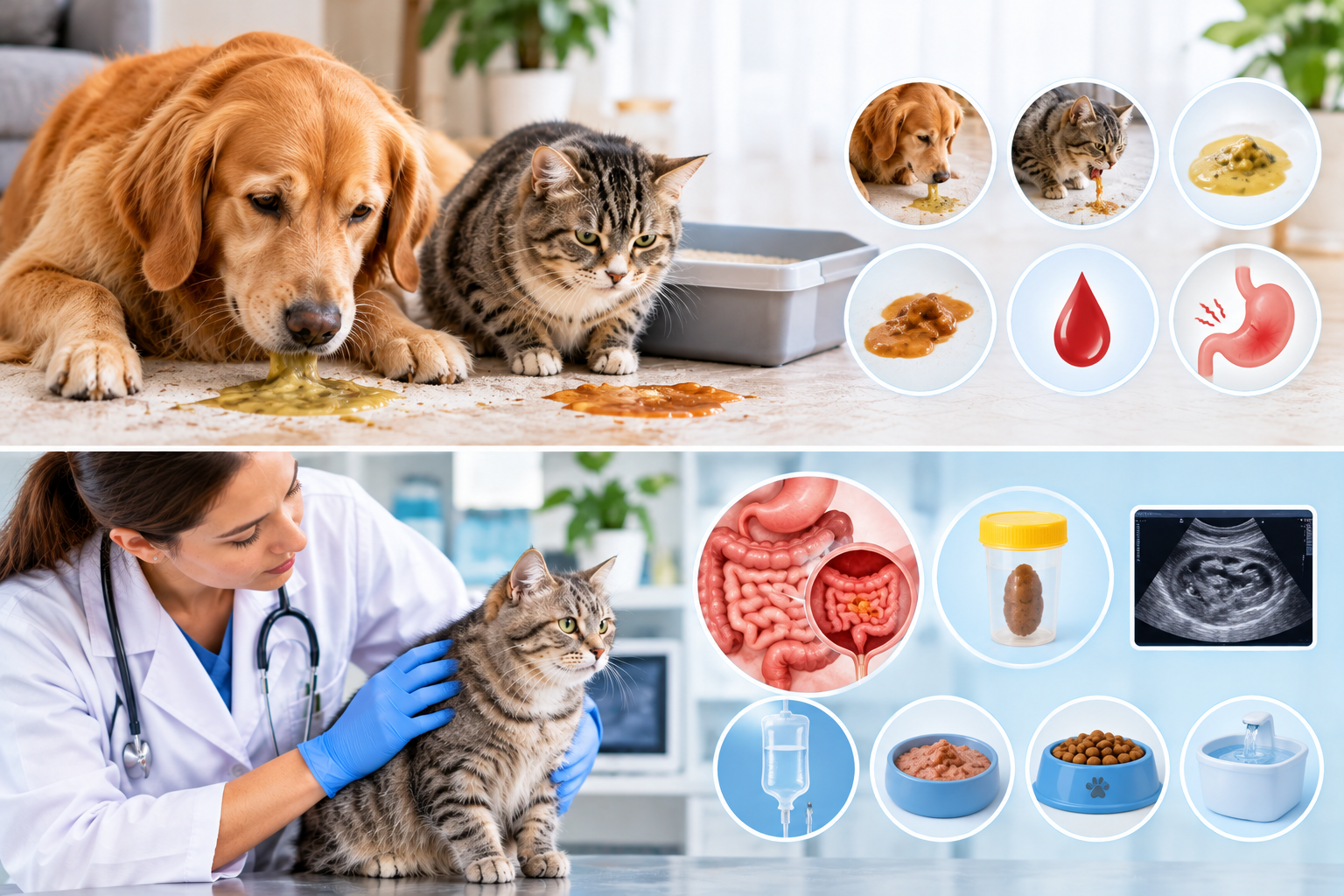
Causes, Warning Signs, and Treatment
Vomiting and diarrhea are common digestive problems in dogs and cats. They may result from a temporary stomach upset, dietary changes, infections, parasites, or more serious medical conditions.
Although mild cases may resolve quickly, persistent or severe digestive symptoms can lead to dehydration and other complications. Recognizing warning signs early and understanding when veterinary care is necessary can help protect your pet’s health.
What Causes Vomiting and Diarrhea in Pets?
Vomiting is the forceful expulsion of stomach contents, while diarrhea involves frequent passage of loose or watery stools. Both are clinical signs rather than diseases themselves.
Common causes include:
1. Dietary Changes and Indiscriminate Eating
Sudden changes in food, spoiled food, table scraps, or eating garbage can upset the digestive system.
Some pets may also react to particular ingredients or consume objects that irritate or obstruct the gastrointestinal tract.
Introducing new food gradually and preventing access to unsuitable items can help reduce these risks.
2. Intestinal Parasites
Parasites such as roundworms, hookworms, and certain protozoa can affect the digestive tract.
Infected animals may develop diarrhea, vomiting, weight loss, a poor coat, or reduced growth. Young animals can be particularly vulnerable to the effects of parasitic disease.
Veterinary examination and appropriate fecal testing can help identify the cause and determine the correct treatment.
3. Infections
Bacterial and viral infections may cause digestive symptoms in dogs and cats.
Some infections can be particularly serious in puppies and kittens, especially when vaccination is incomplete or the animal is otherwise vulnerable.
Prompt veterinary assessment is important when vomiting or diarrhea occurs alongside fever, marked weakness, loss of appetite, or other signs of illness.
4. Food Intolerance and Food Allergies
Some pets develop digestive signs after eating particular ingredients.
Food intolerance and food allergies are different conditions, and neither can be reliably diagnosed from vomiting or diarrhea alone.
A veterinarian may recommend a controlled dietary trial when a food-related problem is suspected.
5. Other Medical Conditions
Vomiting and diarrhea can also be associated with pancreatitis, intestinal inflammation, liver or kidney disease, poisoning, or gastrointestinal obstruction.
Repeated vomiting may occur when an animal swallows a foreign object that becomes lodged in the stomach or intestines.
Because some underlying causes can be life-threatening, severe or persistent symptoms should never be dismissed as a simple digestive upset.
Common Signs to Watch For
In addition to vomiting and diarrhea, affected pets may show:
- Reduced appetite
- Lethargy or weakness
- Abdominal discomfort
- Increased drooling or nausea
- Changes in water consumption
- Weight loss
- Blood in vomit or stool
- Signs of dehydration
Dehydration may be especially concerning when vomiting and diarrhea occur together, because the animal loses fluids through both routes.
The severity of the symptoms, their duration, and the pet’s overall condition help determine how urgently veterinary care is needed.
Vomiting or Regurgitation: What Is the Difference?
Vomiting usually involves active abdominal contractions and the forceful expulsion of stomach contents. The animal may show signs of nausea beforehand, such as lip licking, salivation, or repeated swallowing.
Regurgitation is generally more passive. Food or liquid comes back up without the same forceful abdominal effort and may appear shortly after eating or drinking.
The distinction can help a veterinarian identify whether the problem may involve the stomach or the esophagus.
Owners should describe what happened, when it occurred, and the appearance of the expelled material during the veterinary examination.
How Are Digestive Problems Diagnosed?
Diagnosis depends on the symptoms, their duration, the animal’s age, and its medical history.
A veterinarian may ask about:
- Current food and recent dietary changes
- Possible access to garbage, foreign objects, plants, or toxins
- Frequency and appearance of vomiting and stools
- Water intake and appetite
- Vaccination and parasite-prevention history
- Current medications and supplements
- Previous digestive problems
Depending on the findings, investigations may include a physical examination, fecal testing, blood tests, urinalysis, abdominal X-rays, or ultrasound.
Not every pet requires all these tests. The veterinarian selects the appropriate diagnostic approach according to the suspected cause and the severity of the condition.
Accurate diagnosis helps distinguish mild digestive upset from infections, obstruction, poisoning, and other conditions that require specific treatment.
How Are Vomiting and Diarrhea Treated?
Treatment depends on the underlying cause and the animal’s condition.
Fluid and Electrolyte Support
Vomiting and diarrhea can cause fluid loss and disturbances in electrolyte balance.
Depending on the severity of dehydration, a veterinarian may recommend oral, subcutaneous, or intravenous fluid therapy.
Severely affected animals may require hospitalization and monitoring.
Medication When Necessary
The veterinarian may prescribe medication to control vomiting, relieve discomfort, or treat a confirmed underlying condition.
Antibiotics are not necessary for every case of digestive illness. Their use should depend on the diagnosis and clinical findings.
Owners should never give human medicines or leftover veterinary medication without professional guidance.
Dietary Management
Once the animal is stable enough to eat, a veterinarian may recommend small, frequent meals of an appropriate, easily digestible diet.
The timing of feeding and the type of food should be based on the animal’s condition. Puppies, kittens, very small pets, and animals with existing medical problems may need special care.
Treating the Underlying Cause
Parasites, infections, dietary problems, poisoning, and gastrointestinal obstruction require different approaches.
Treating only the visible symptoms without identifying the cause may delay appropriate care or allow the problem to recur.
What Can Pet Owners Do at Home?
Home monitoring may be reasonable for a brief, mild episode in an otherwise healthy adult pet that remains alert and comfortable. However, veterinary advice should be sought if symptoms recur, persist, or worsen.
Helpful steps include:
Provide Access to Fresh Water
Keep clean water available. Do not force your pet to drink or give large amounts at once if this triggers further vomiting.
Monitor Symptoms
Record the frequency of vomiting and diarrhea, the appearance of the stool or vomit, appetite, drinking, and activity level.
Avoid Unapproved Treatments
Do not give human anti-diarrheal medicines, painkillers, antibiotics, or home remedies without veterinary guidance.
Prevent Access to Potential Hazards
Keep rubbish, spoiled food, medicines, cleaning products, toxic plants, and small swallowable objects out of reach.
Follow Veterinary Feeding Advice
Avoid sudden dietary changes and follow the feeding plan recommended for your pet’s particular condition.
If you suspect that your pet has swallowed a toxin or a foreign object, contact a veterinarian immediately. Do not induce vomiting unless specifically instructed to do so.
When Should You Contact a Veterinarian?
Arrange prompt veterinary assessment if your pet has repeated vomiting, persistent diarrhea, reduced appetite, unusual tiredness, or signs of abdominal discomfort.
Seek emergency veterinary care if you notice:
- Blood in vomit or stool, especially in significant amounts
- Severe weakness, collapse, or difficulty standing
- A painful or noticeably swollen abdomen
- Repeated attempts to vomit without producing anything
- Difficulty breathing or other severe symptoms
- Suspected poisoning or ingestion of a dangerous object
- Signs of significant dehydration
Repeated unproductive retching accompanied by abdominal swelling in a dog may indicate gastric dilatation-volvulus, a life-threatening emergency.
Puppies, kittens, senior pets, and animals with chronic diseases may deteriorate more quickly and should be assessed particularly carefully.
Frequently Asked Questions
Is occasional vomiting normal in dogs and cats?
An isolated episode may occur for several reasons, but repeated vomiting or vomiting accompanied by other symptoms warrants veterinary attention.
Can a change in food cause diarrhea?
Yes. Sudden dietary changes can upset the digestive system. Gradual transitions may help, but persistent diarrhea should be investigated rather than attributed automatically to food.
Should I stop feeding my pet if it is vomiting?
Feeding recommendations depend on the animal’s age, health, and symptoms. Prolonged fasting may be inappropriate for some pets, particularly young animals or those with underlying medical conditions. Ask your veterinarian for advice.
Can I give my pet human medication for diarrhea?
No medication should be given without veterinary guidance. Some human medicines are unsuitable or potentially harmful to animals, and the appropriate treatment depends on the cause.
When does diarrhea become dangerous?
Diarrhea is particularly concerning when it is frequent, severe, bloody, persistent, or accompanied by vomiting, weakness, abdominal pain, or reduced appetite.
Final Thoughts
Vomiting and diarrhea can result from relatively mild digestive disturbances, but they may also signal serious disease.
Monitoring symptoms, preventing access to harmful substances, maintaining appropriate nutrition, and seeking timely veterinary care are essential steps in protecting dogs and cats.
The most important principle is to avoid treating persistent or severe digestive symptoms as a minor problem. Early evaluation can help identify the cause, guide appropriate treatment, and reduce the risk of complications.
Regnovet supports animal health through veterinary medicines and nutritional products developed for different animal species and health needs. If your pet experiences repeated vomiting, persistent diarrhea, or other concerning digestive symptoms, consult your veterinarian for an appropriate diagnosis and care plan.